Q: How does the overflow system work to create a water reserve?
The planter comes with overflows (calibrated openings) that the user drills at the desired height according to the desired water reserve level. By placing a layer of clay balls (argex) at the bottom of the pot before adding the substrate, water naturally accumulates between the balls and forms a reserve accessible to the roots by capillarity. The thicker the layer of balls, the greater the reserve. It is a simple, economical, and fully modular system — very different from an automatic reservoir, but very effective for extending watering autonomy.
Q: How do the mounting wedges fit my railing?
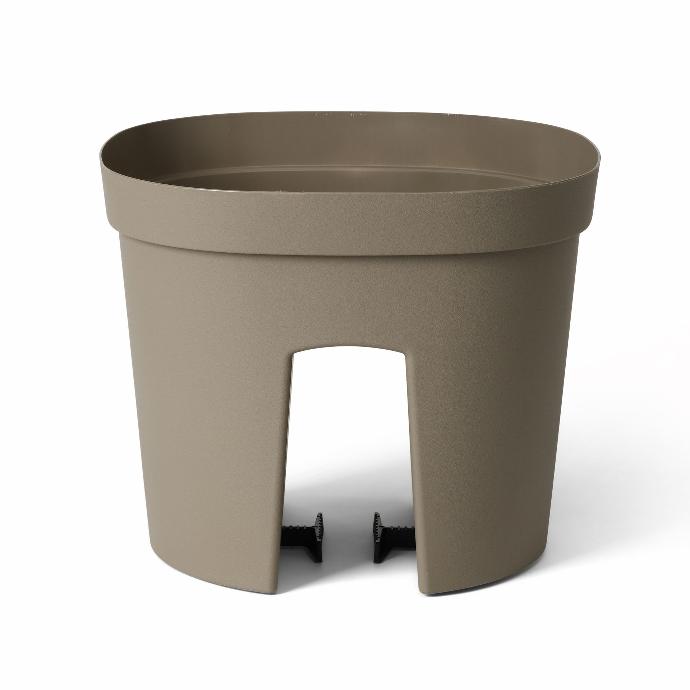
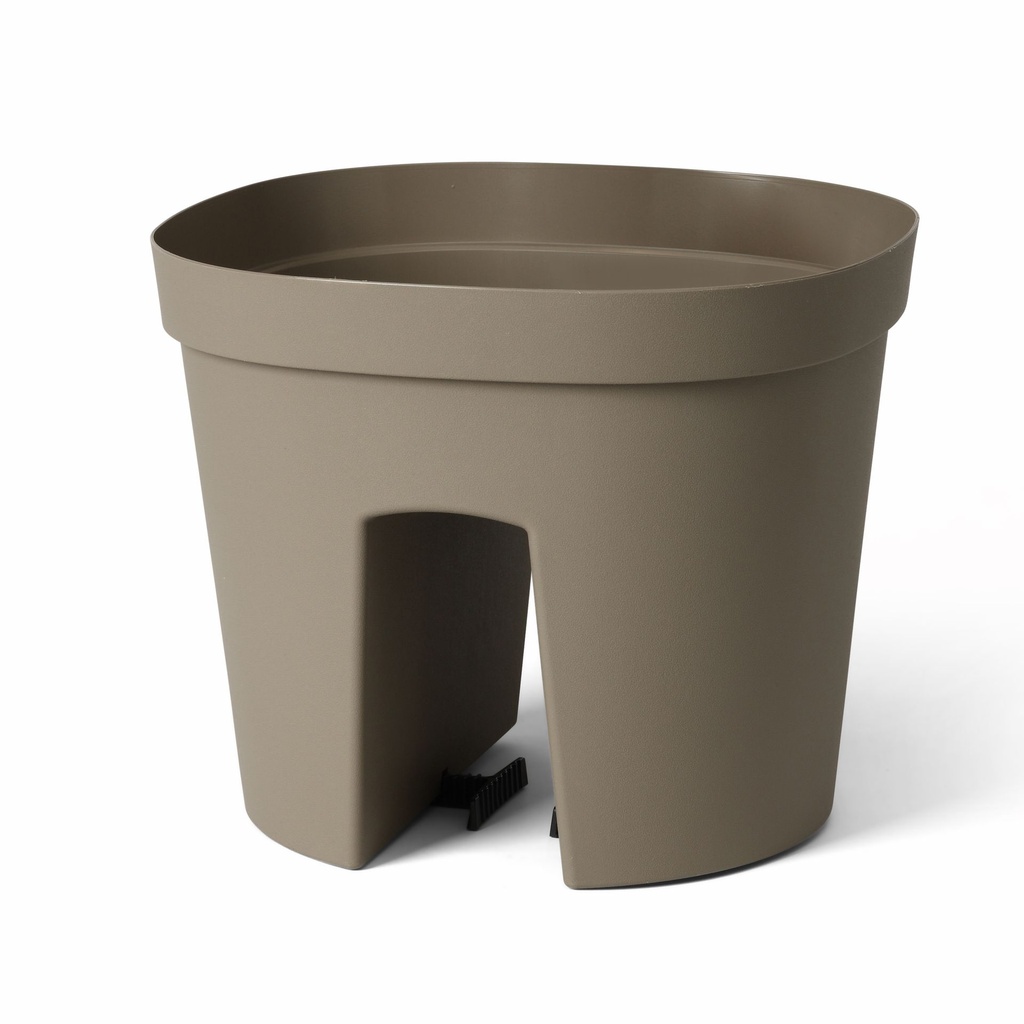
The mounting wedges are adjustable pieces that fit between the pot and the railing to fill the space and ensure stable contact regardless of the thickness of the profile — round metal tube, square profile, wooden board, tension cable. They allow a single planter to adapt to practically all types of balcony railings without additional accessories.
Q: Is the reinforcement bar really necessary?
Absolutely — it's the difference between a planter that stays put and a planter that tips over. A railing planter full of wet soil and plants can weigh several kilos and exert a significant leverage effect outward. The reinforcement bar counteracts this tipping by pressing against the inner face of the railing — an essential safety feature for a high pot.
Q: Are the clay balls (argex) included with the planter?
No — the clay balls are not included. They are available at all specialized gardening retailers. The recommended layer at the bottom of the pot is 3 to 5 cm of argex before adding the growing substrate.
Q: Can these planters stay on the railing in winter?
Yes — balcony & terrace. Polypropylene is tested down to -20 °C. It is recommended to partially empty the substrate and clay balls in winter to prevent frozen water from exerting excessive pressure on the pot. The wedges and the reinforcement bar can remain in place on the railing.