Q: What is the "vertically striped" surface of the Lino?
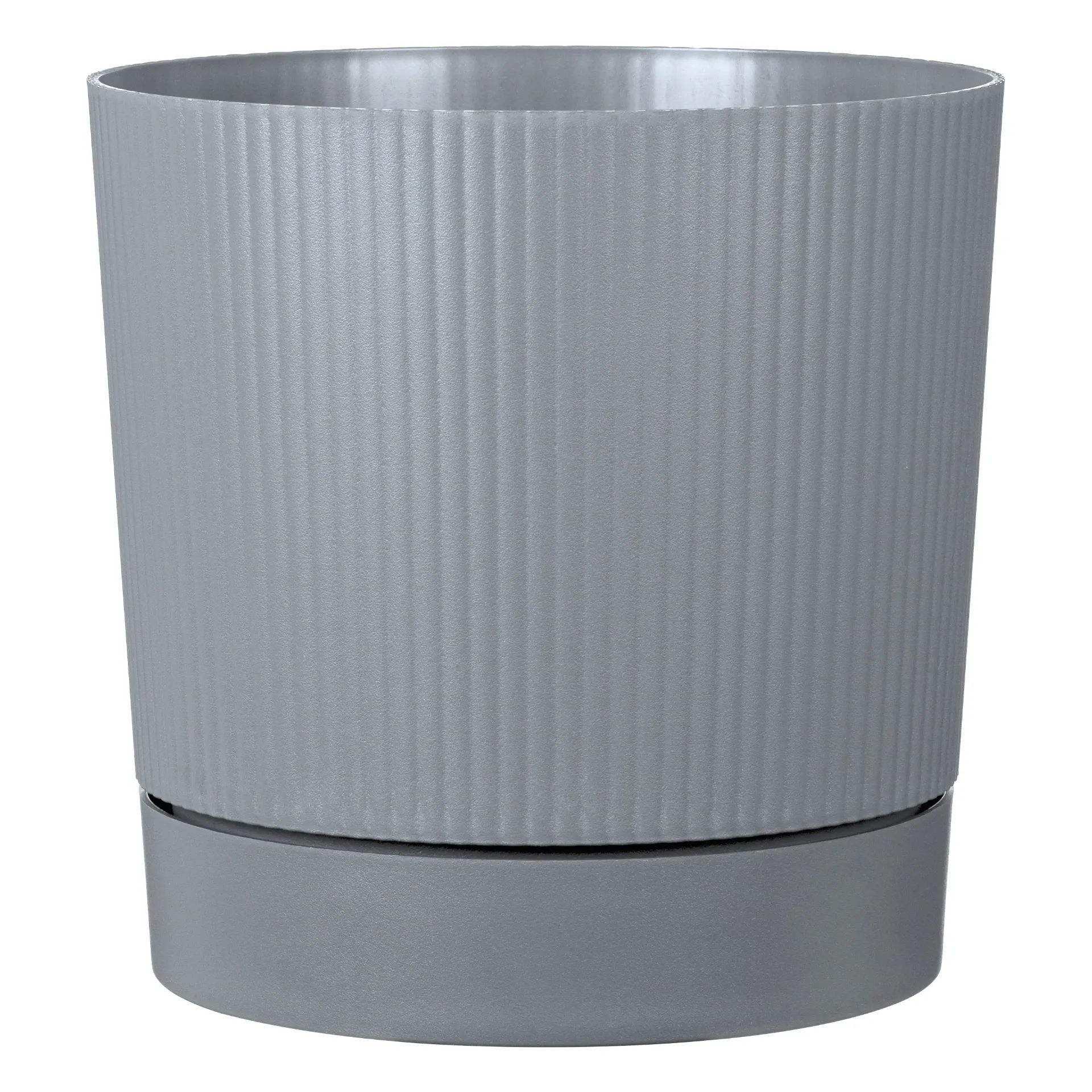
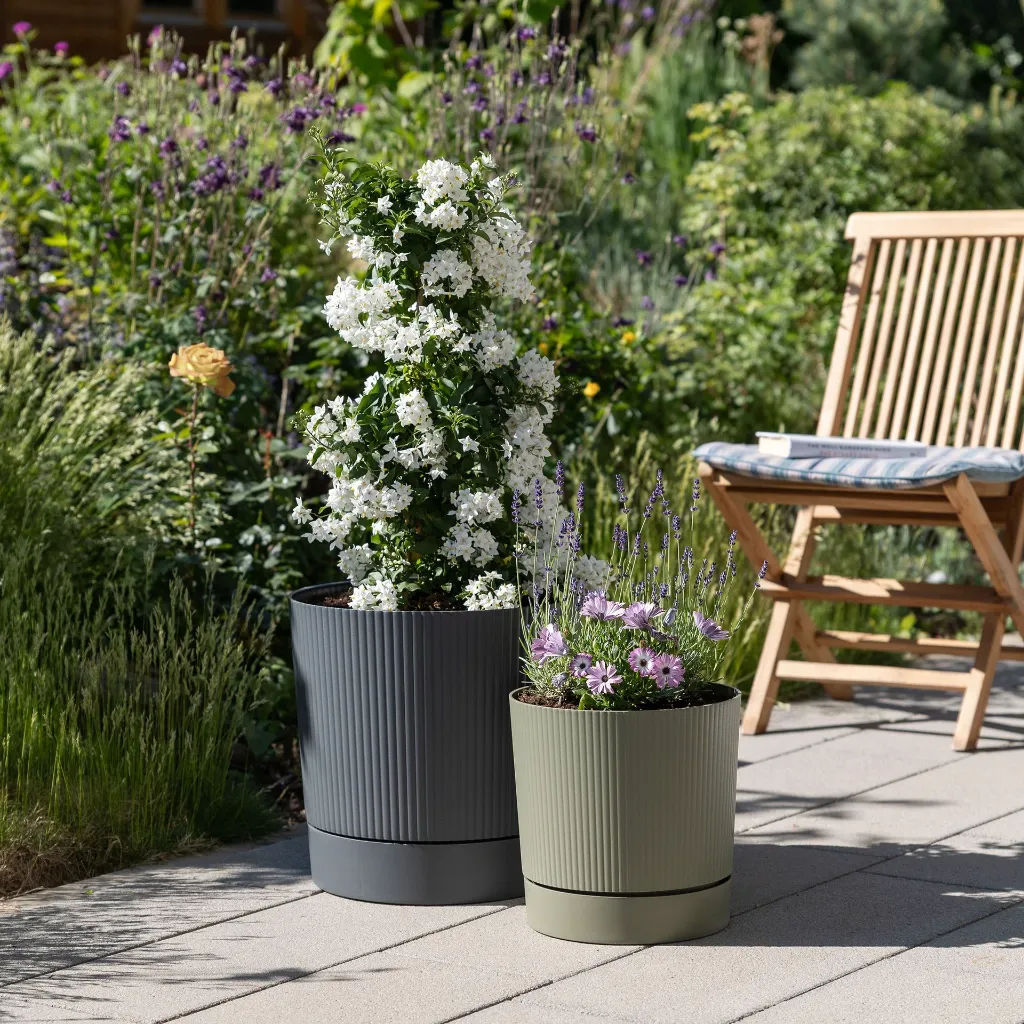
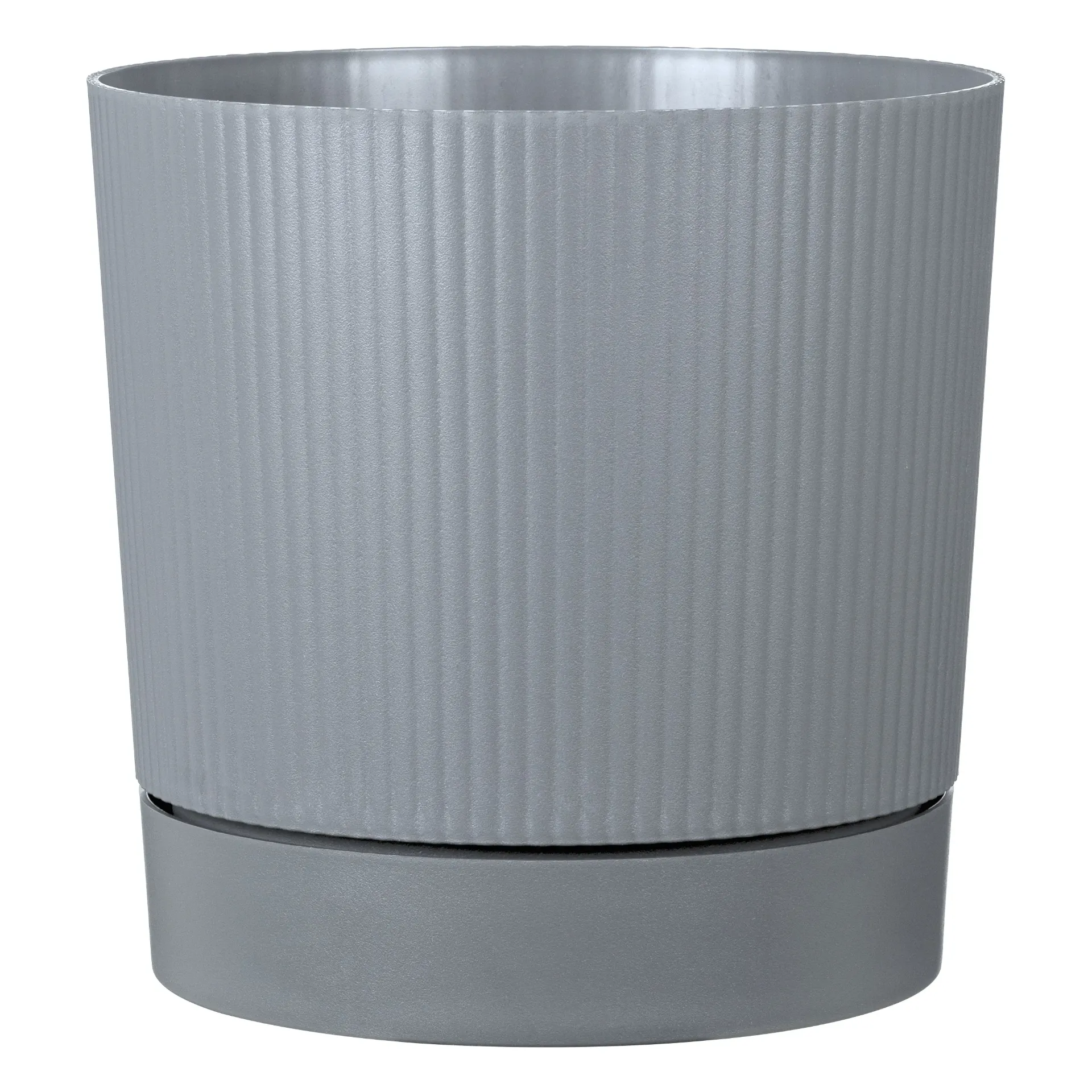
The Lino pot has a surface worked with vertical parallel stripes or grooves molded in polypropylene throughout the height of the pot — like a texture of linen fabric or architectural fluting. These stripes give the pot a very graphic and tactile texture that captures natural light differently depending on the angles and times. This is what immediately distinguishes the Lino from all other pots in the catalog and gives it a very pronounced design character.
Q: What is a "flat clipped" saucer and why is it important?
The clipped saucer is a saucer that attaches directly under the pot by a clip system — it does not slide, does not detach during movement, and remains firmly in position regardless of handling. "Flat" means that it is flat — it does not create any elevation or imbalance under the pot. In practice: no saucer that stays stuck to the ground when lifting the pot, no water overflowing on the sides during movement — a much cleaner and easier handling, particularly appreciated for large formats.
Q: Is the saucer included in the delivery?
Yes — the clipped saucer is an integral part of the Lino pot. It is delivered clipped under the pot and ready to use upon receipt. No separate purchase, no compatibility to check.
Q: What is the difference between the Lino pot and the Plano pot?
Both share the same colors, the same reservoir, the same polypropylene, and the same sizes. The main difference is in the surface and the accessory: the Plano has a smooth surface; the Lino has a vertically lined surface and comes with a flat clipped saucer. The Lino is the most advanced pot of the two — its texture and saucer make it the most stylish and practical version for indoor use or on a well-kept terrace.
Q: Can this pot stay outside all year round?
Yes — triple use including outdoor garden. Polypropylene is tested down to -20 °C and treated with UV protection for all four colors. The vertical grooves of the Lino do not retain moisture and do not create areas of fragility in frost. Occasional wiping is sufficient for maintenance.