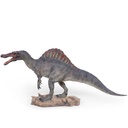
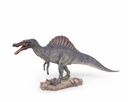
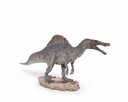
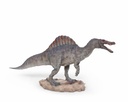
Q: What is a Spinosaurus and how is it different from other carnivorous dinosaurs?
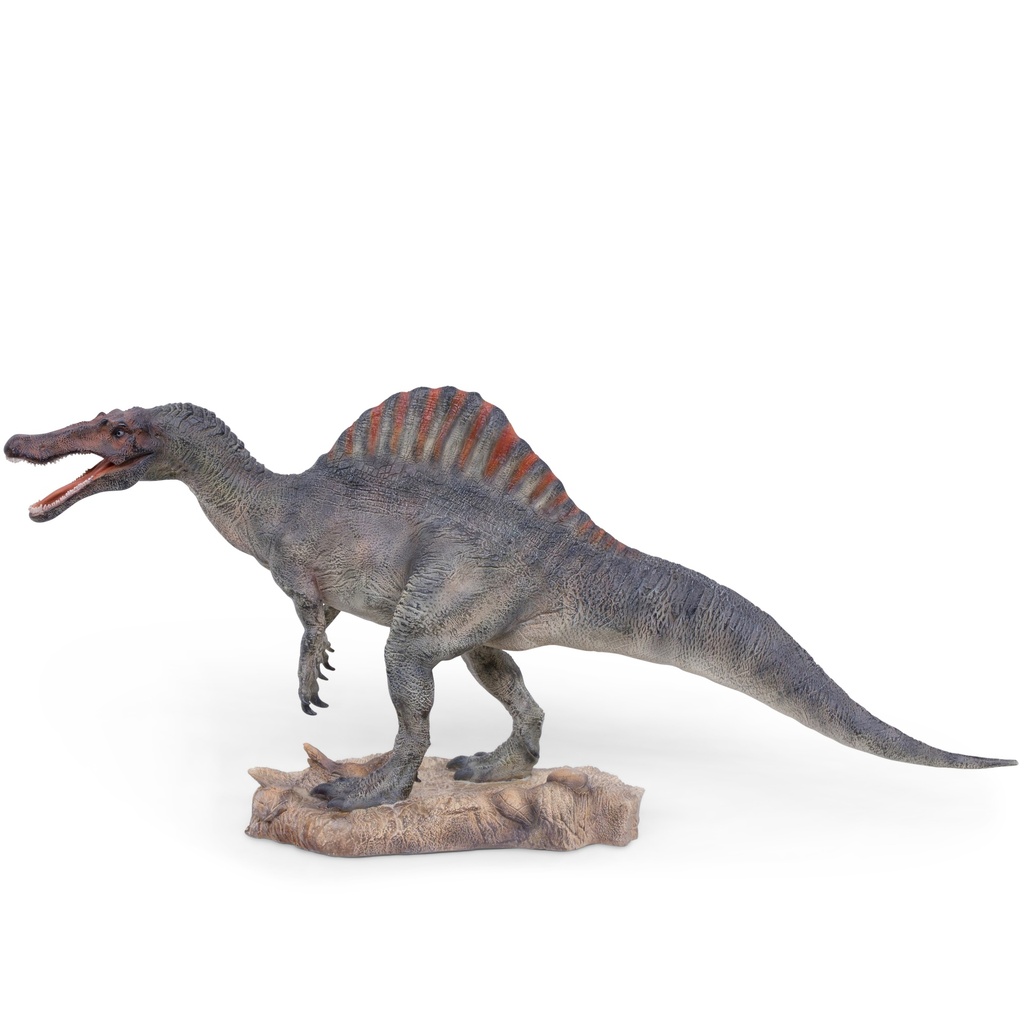
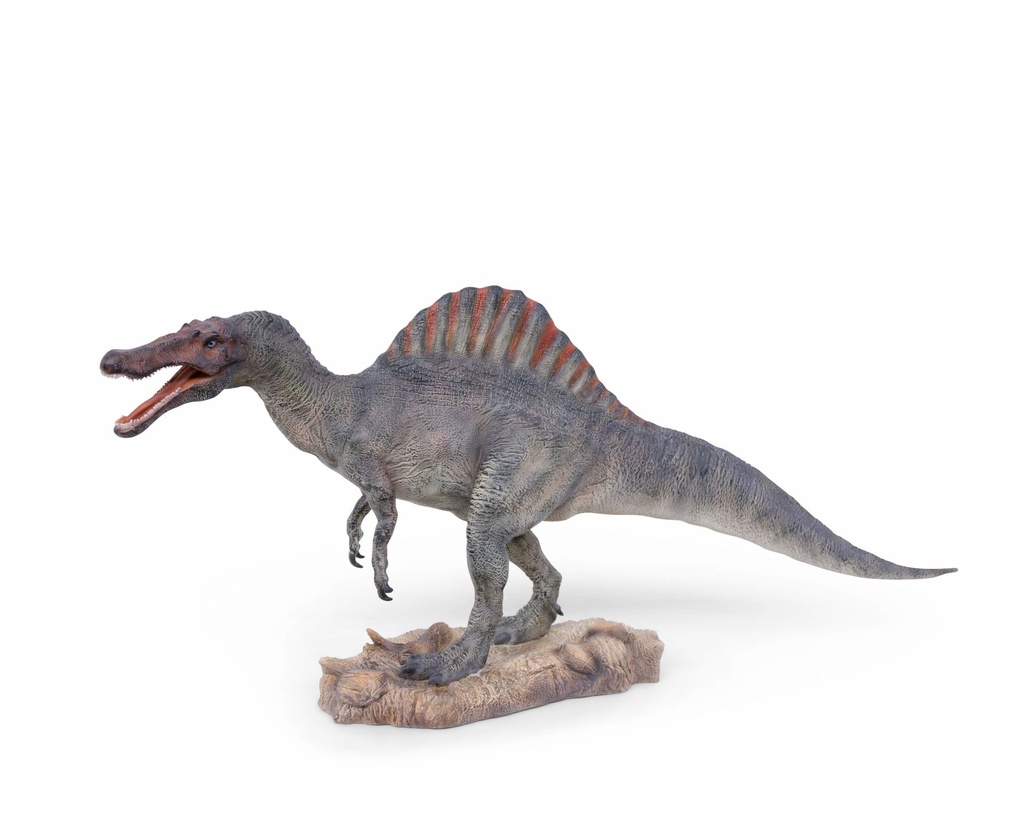
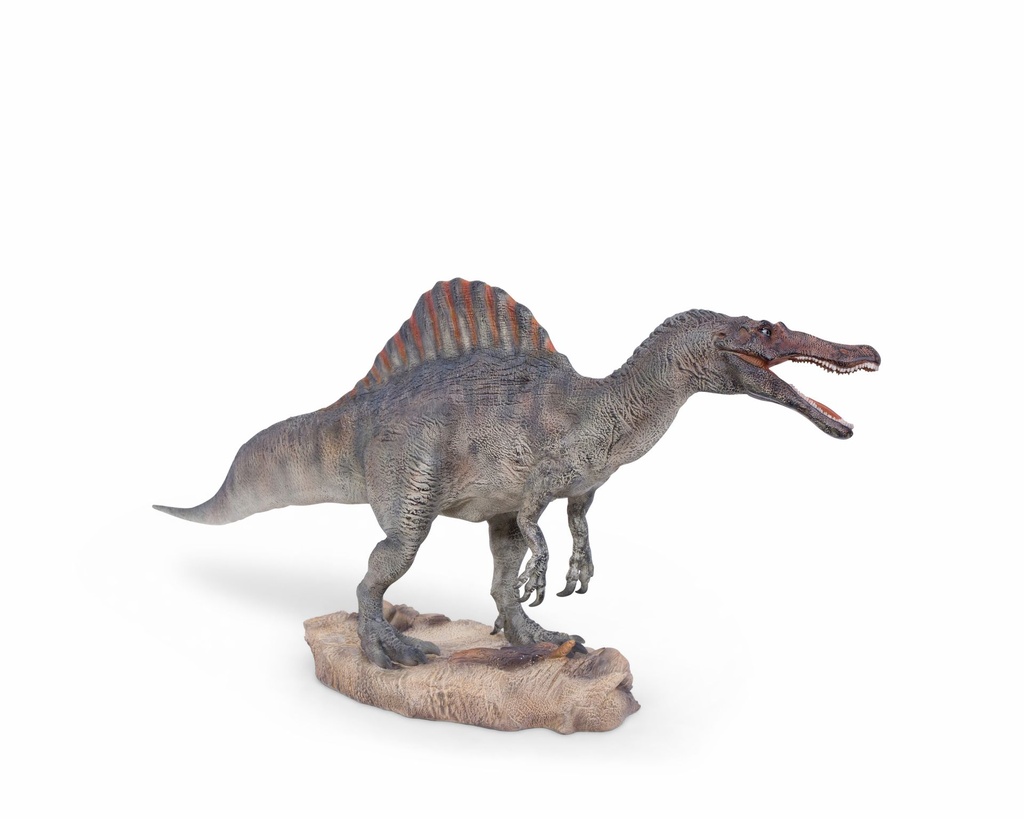
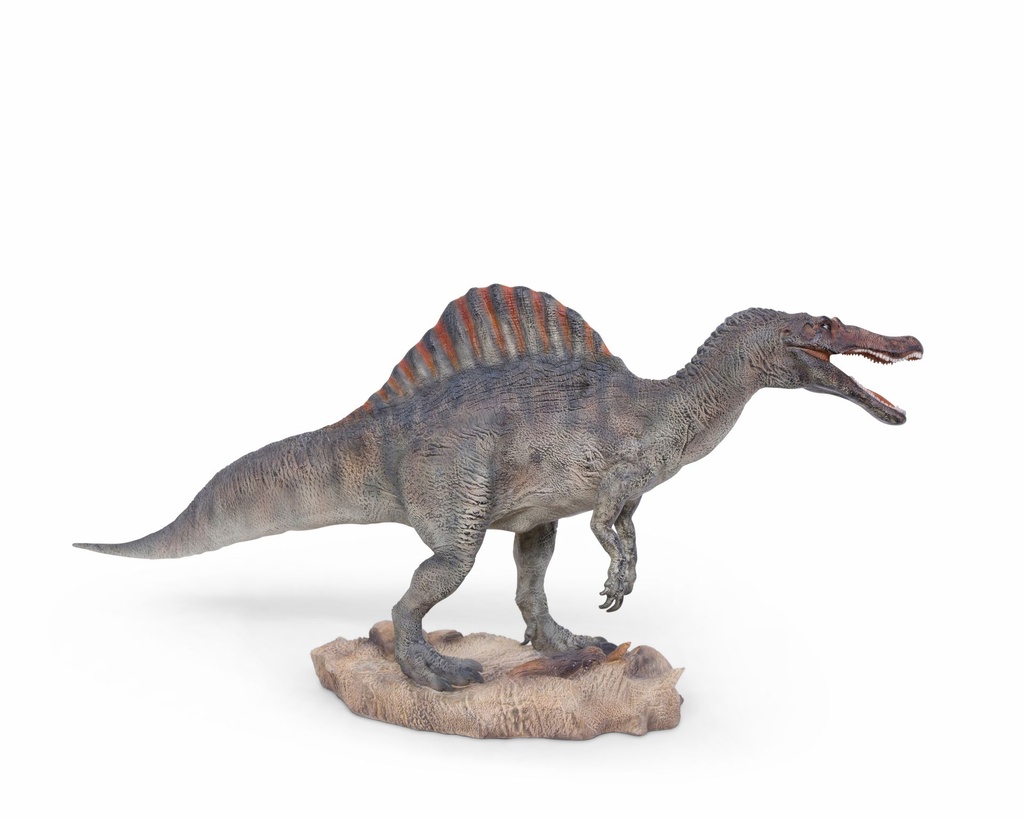
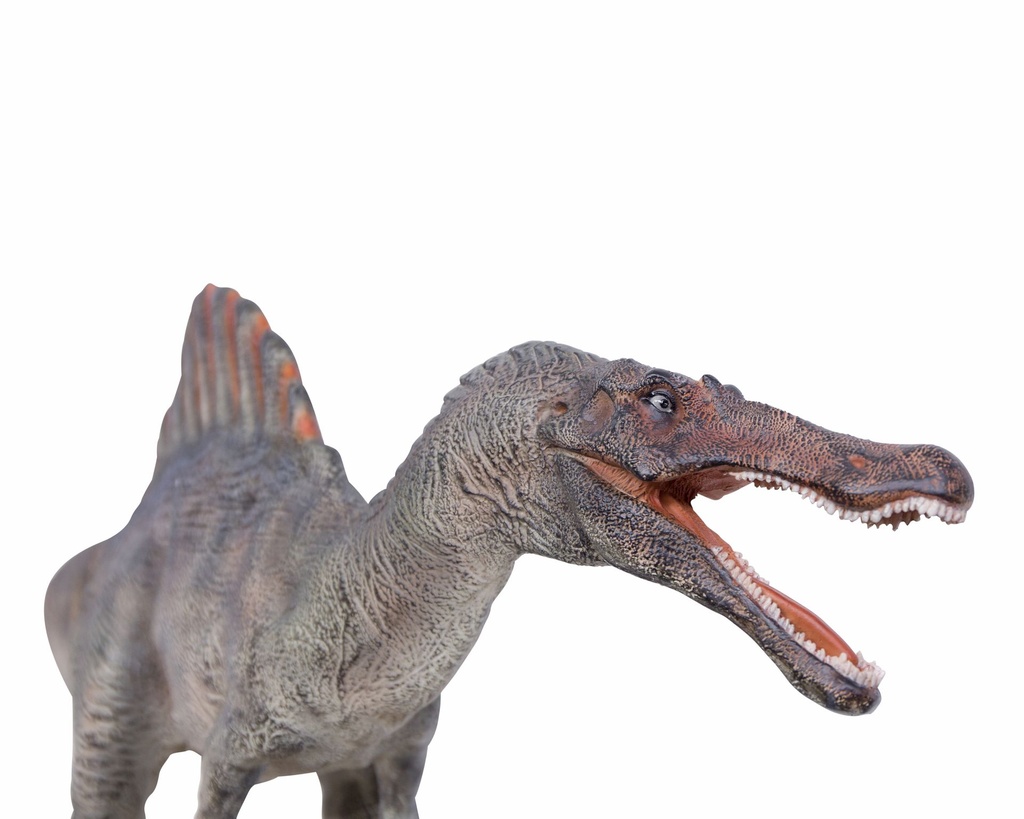
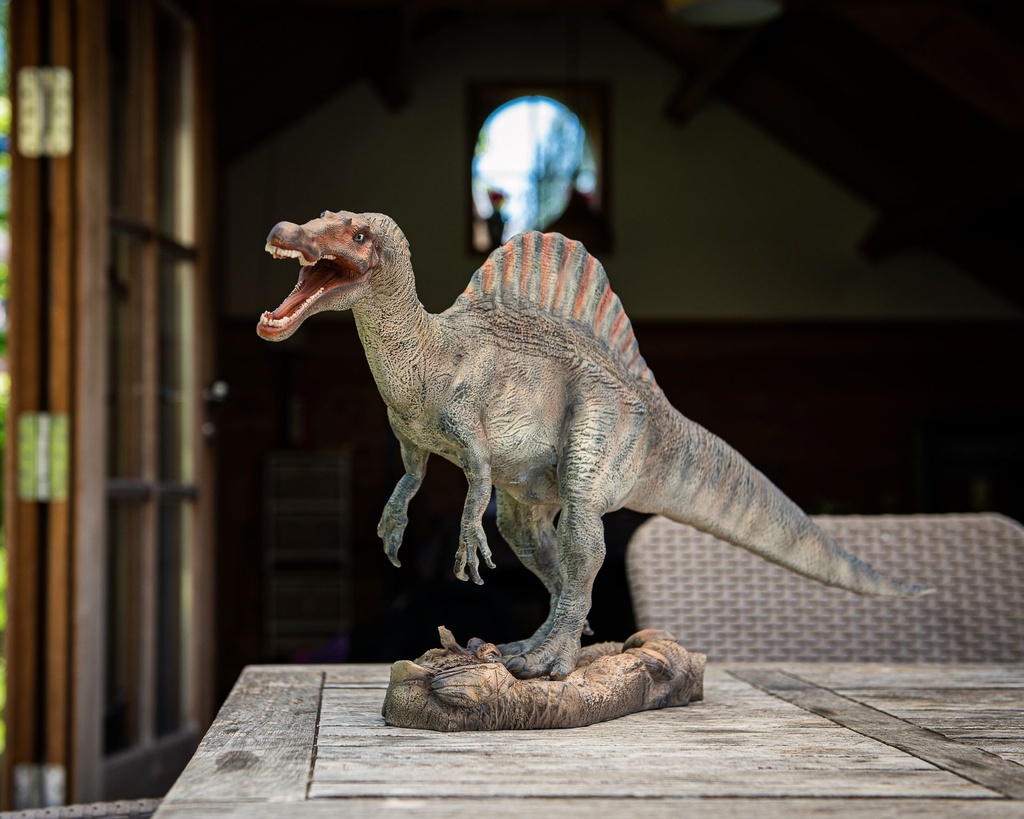
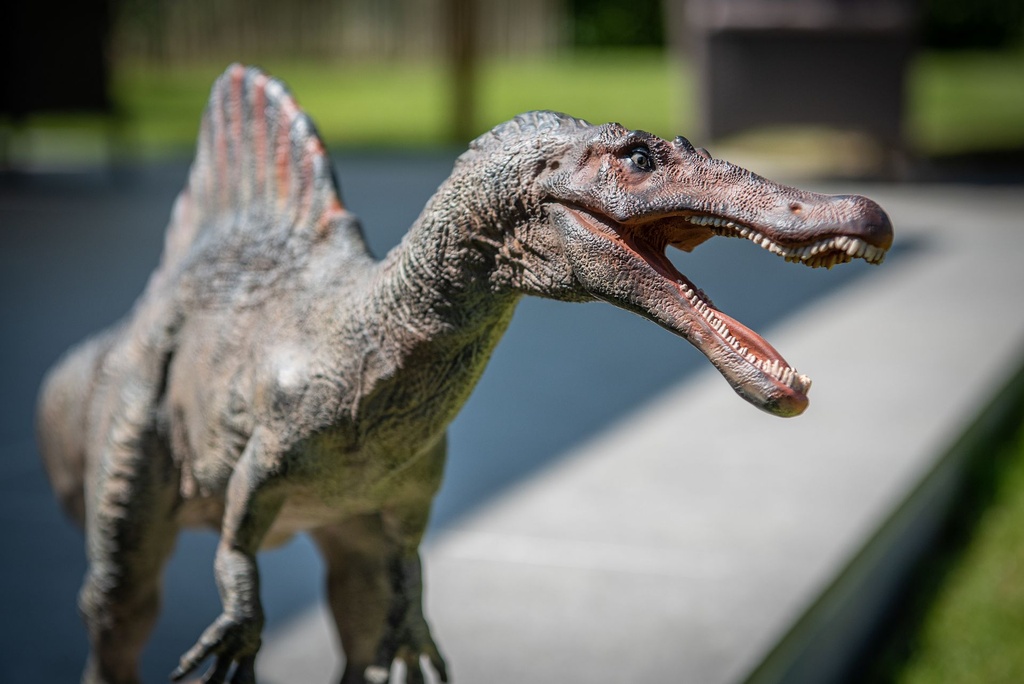
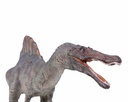
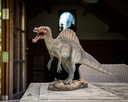
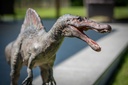
The Spinosaurus (Spinosaurus aegyptiacus) was a carnivorous dinosaur from the Late Cretaceous, which lived about 95-100 million years ago in North Africa. It is the largest known carnivorous dinosaur — estimated to be between 14 and 18 meters long, surpassing the T-Rex. Its uniqueness is that it was a semi-aquatic adapted for fishing — with a long, crocodile-like snout for catching fish, hind limbs adapted for swimming, and especially this sail formed by vertebral spines that could reach 1.65m in height on the actual animal. Recent discoveries have revealed that it had a more horizontal and aquatic posture than previously thought — exactly as this sculpture represents.
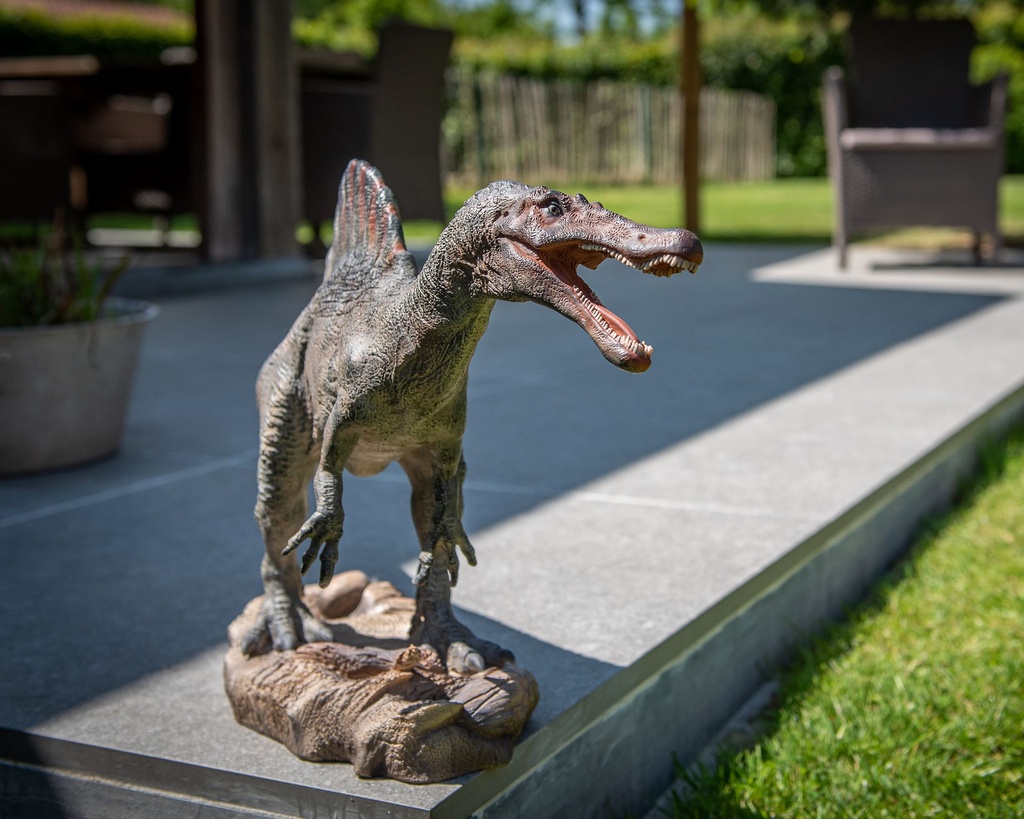
Q: Can this sculpture stay in an outdoor garden all year round?
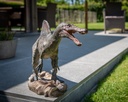
Yes without restriction — balcony & terrace and outdoor garden. The polyresin is tested down to -20 °C and treated for UV resistance. Weighing 2.90kg and 77cm long on the ground, its stability outdoors is good. Its horizontal posture gives it a wide footprint on the ground that stabilizes it naturally.
Q: What is the difference between the Spinosaurus and the other dinosaurs in the catalog?
It is the only carnivore — all the others are herbivores. Its morphology is also radically different: long and slender snout (vs short snout of the T-Rex), characteristic sail along the entire length of the back (absent in other species), more horizontal and lower posture (H36cm vs H43-75cm for the others). It is also the dinosaur in the catalog that represents the most recent scientific discovery — the understanding of its semi-aquatic morphology has been profoundly revised in the last 10 years.
Q: Is this a good piece for someone who is seriously interested in paleontology?
This is precisely the piece in the catalog that best fits this profile. The Spinosaurus has fascinated paleontologists since its first discovery and continues to fuel scientific debates — its posture, diet, and locomotion are still active subjects of study. Giving this sculpture to a paleontology enthusiast is giving them an animal that says something about their level of knowledge and opens a real scientific conversation.
Q: Can the Spinosaurus be associated with the herbivores in the catalog for a complete prehistoric composition?
Yes — and it is even the most coherent composition. The four dinosaurs in the catalog (Spinosaurus + Stegosaurus + Parasaurolophus + Brachiosaurus) represent four species, four different eras, and three distinct diets. They would not have met in nature (different geological periods), but in a themed garden, the visual effect is spectacular — four totally different silhouettes, four very distinct heights.