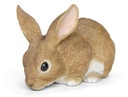
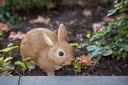
Q: Why choose this rabbit rather than a rabbit in a neutral posture?
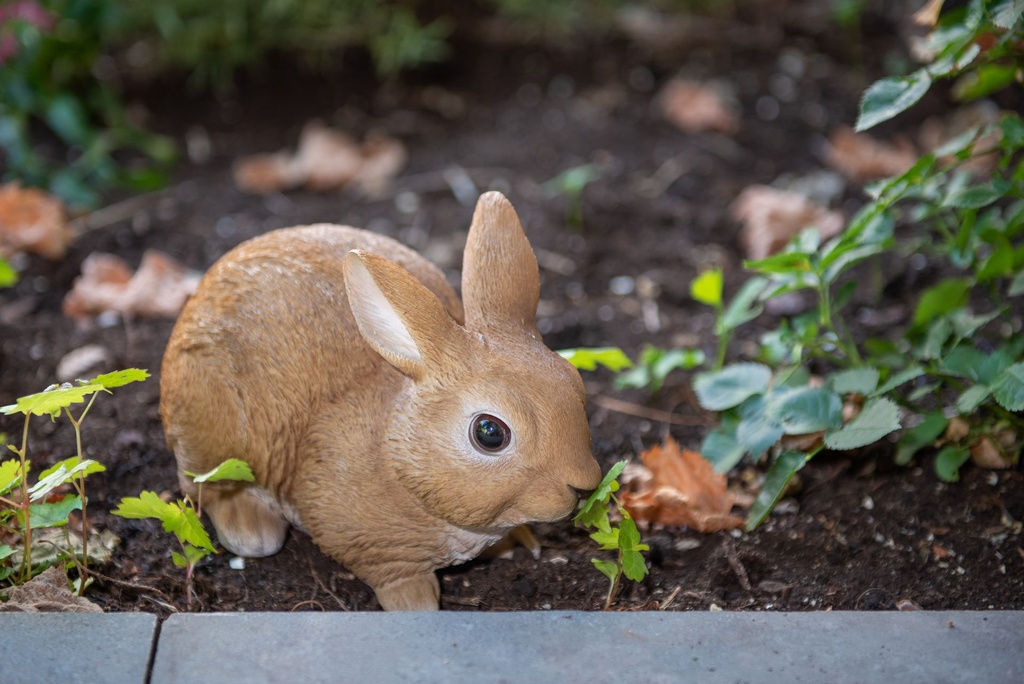
For the narrative dimension. A rabbit that is eating is a rabbit doing something — and that is precisely what catches the eye and triggers a smile. In a garden, placed at the foot of a flowerbed or in the grass, this posture is the one that produces the strongest effect of illusion and surprise. It’s the piece you show to visitors saying "look, I have a rabbit in my garden" — before they realize it’s a sculpture.
Q: What is the difference with the other rabbits in the range?
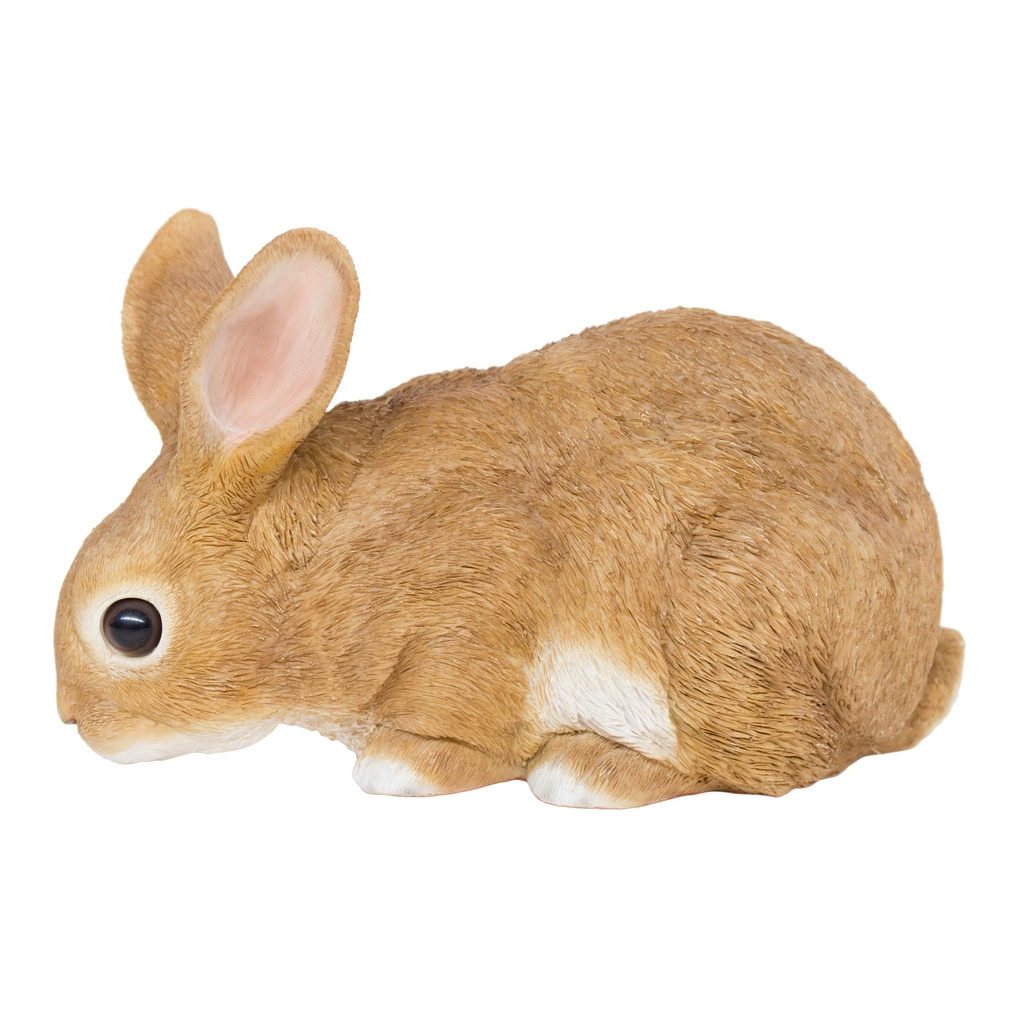
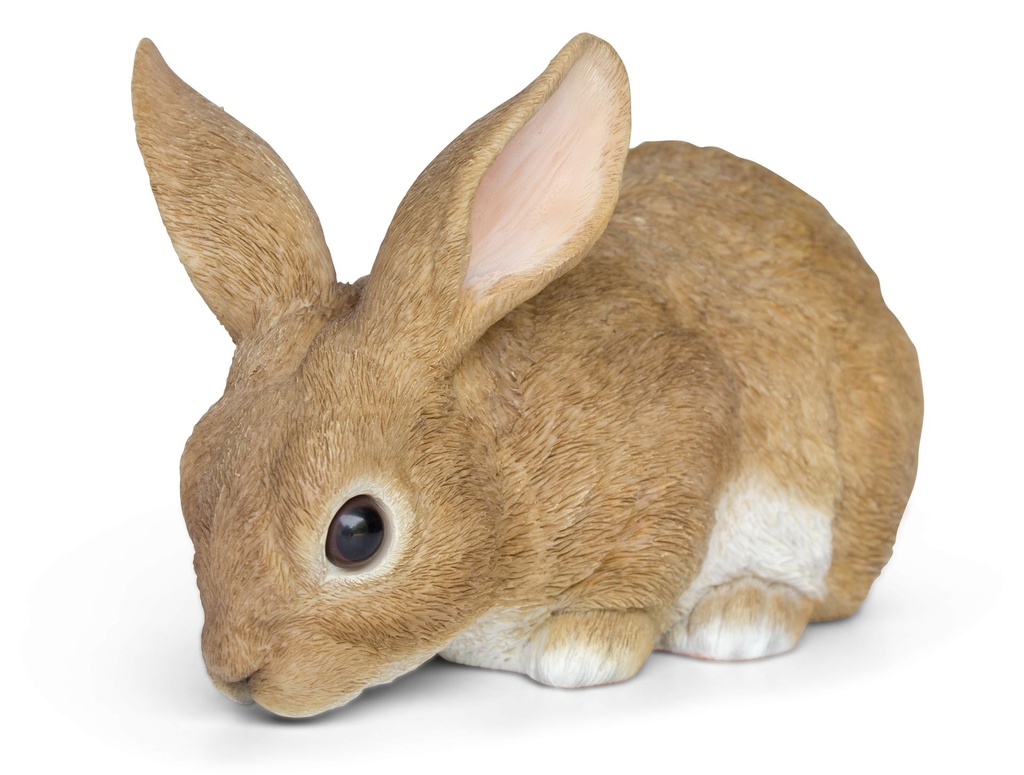
This is the only rabbit in an active posture in the entire range. All the other rabbits — baby rabbit, 4-color rabbit, big-eared rabbit — are in a neutral or alert posture. This one is eating: head tilted down, body slightly forward, ears relaxed. This posture completely changes the reading of the animal in its environment.
Q: Can this sculpture stay outside all year round?
Yes for balcony and terrace — the polyresin is tested down to -20 °C and treated for UV resistance. The technical sheet mentions indoor and balcony & terrace. In a garden on the ground, a slightly sheltered location (under a bush, in a flowerbed) better protects the hand-painted details and minimizes direct UV exposure in the long term. Its weight of 750 g ensures good stability even when exposed.
Q: Does this "head down" posture work well visually indoors as well?
Yes — and differently. Outdoors, the posture creates the illusion of a rabbit that is actually nibbling. Indoors, placed on the floor or a low shelf, it creates a more intimate and contemplative scene — as if the rabbit is absorbed in something, indifferent to its surroundings. The effect is less trompe-l'œil, but very decorative and natural.
Q: Can it be combined with the other rabbits in the range to create a complete scene?
Absolutely — it is even the recommended composition. The eating rabbit (head down, focused) brings the narrative dimension that is often missing from scenes composed solely of rabbits in a neutral posture. Pair it with the big-eared rabbit (head up, alert) and the baby rabbit (low posture, close) — you get three different moments in the life of a warren, three characters that complement each other without repeating.