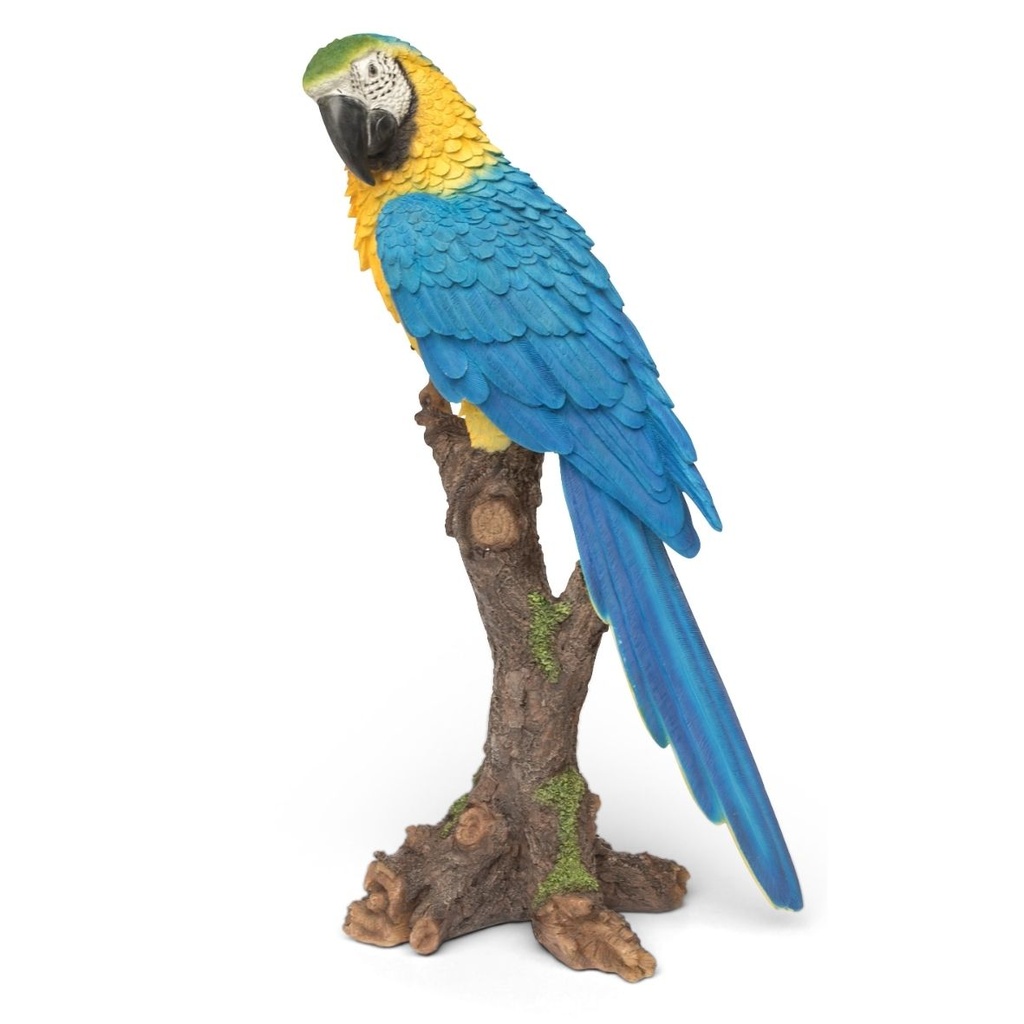
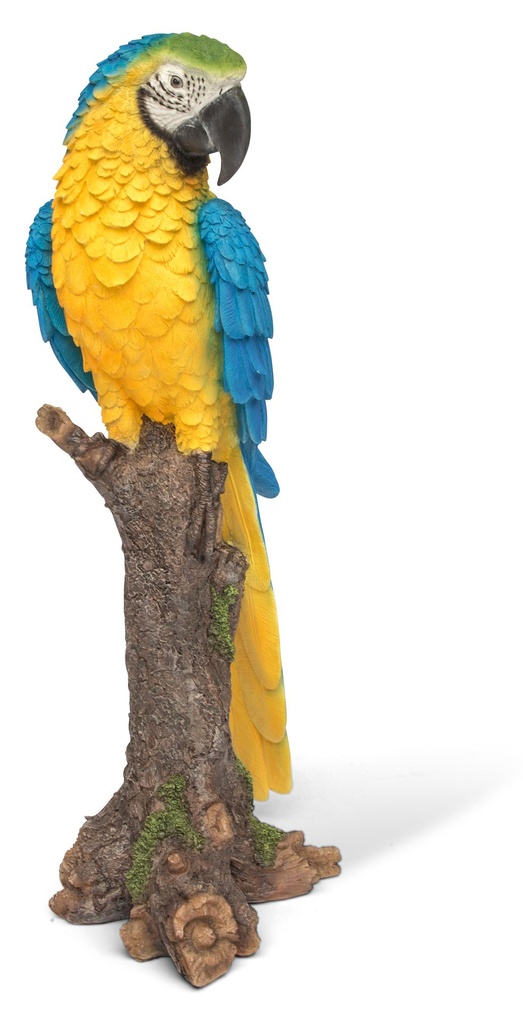
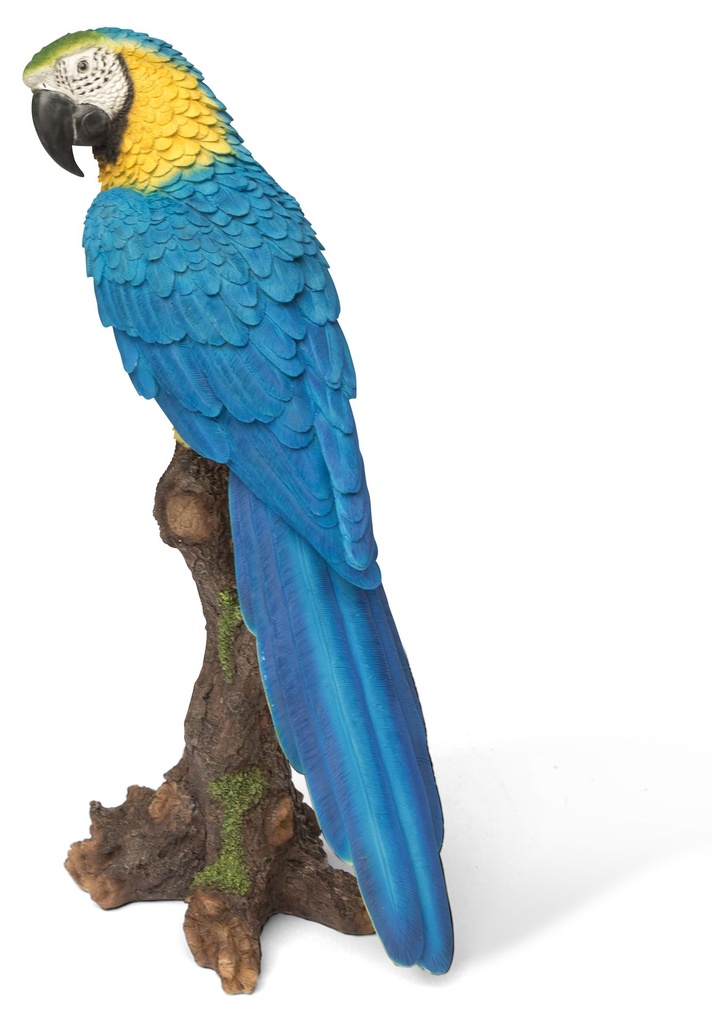
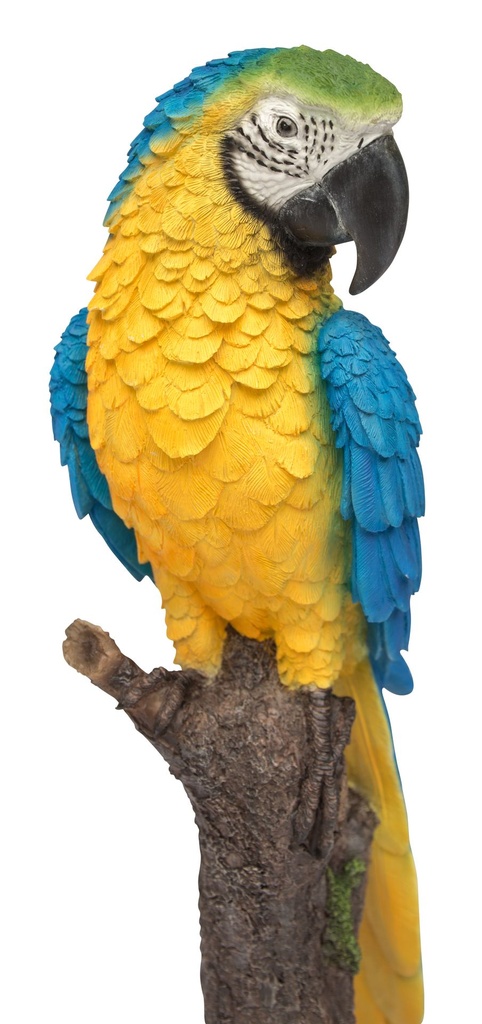
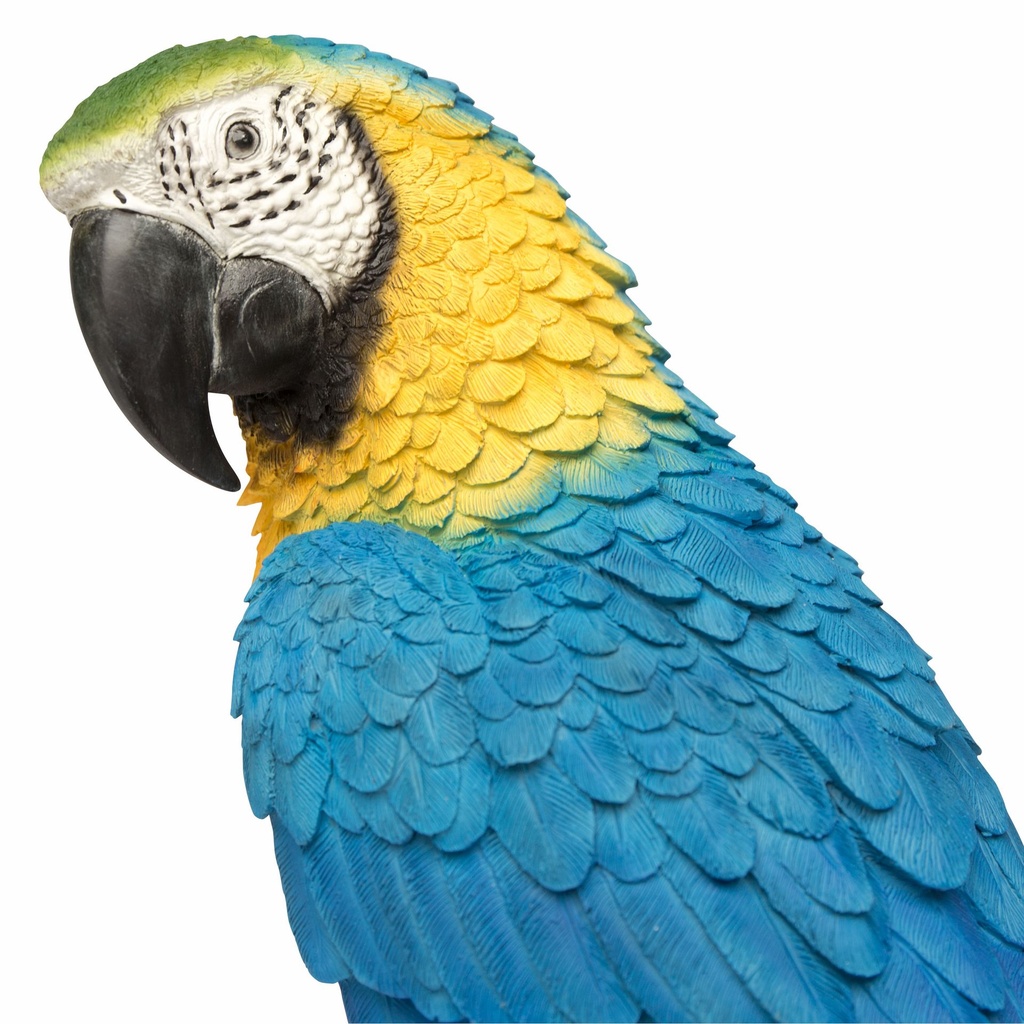
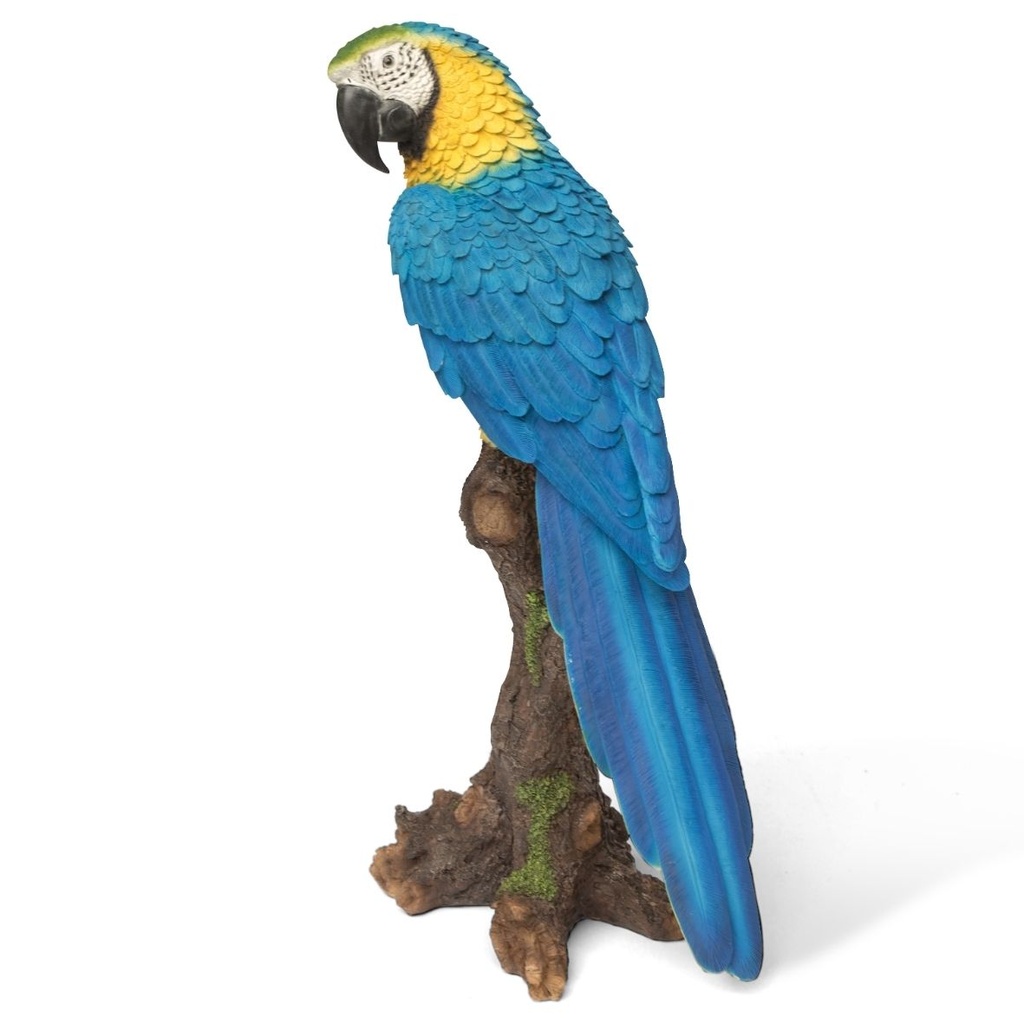
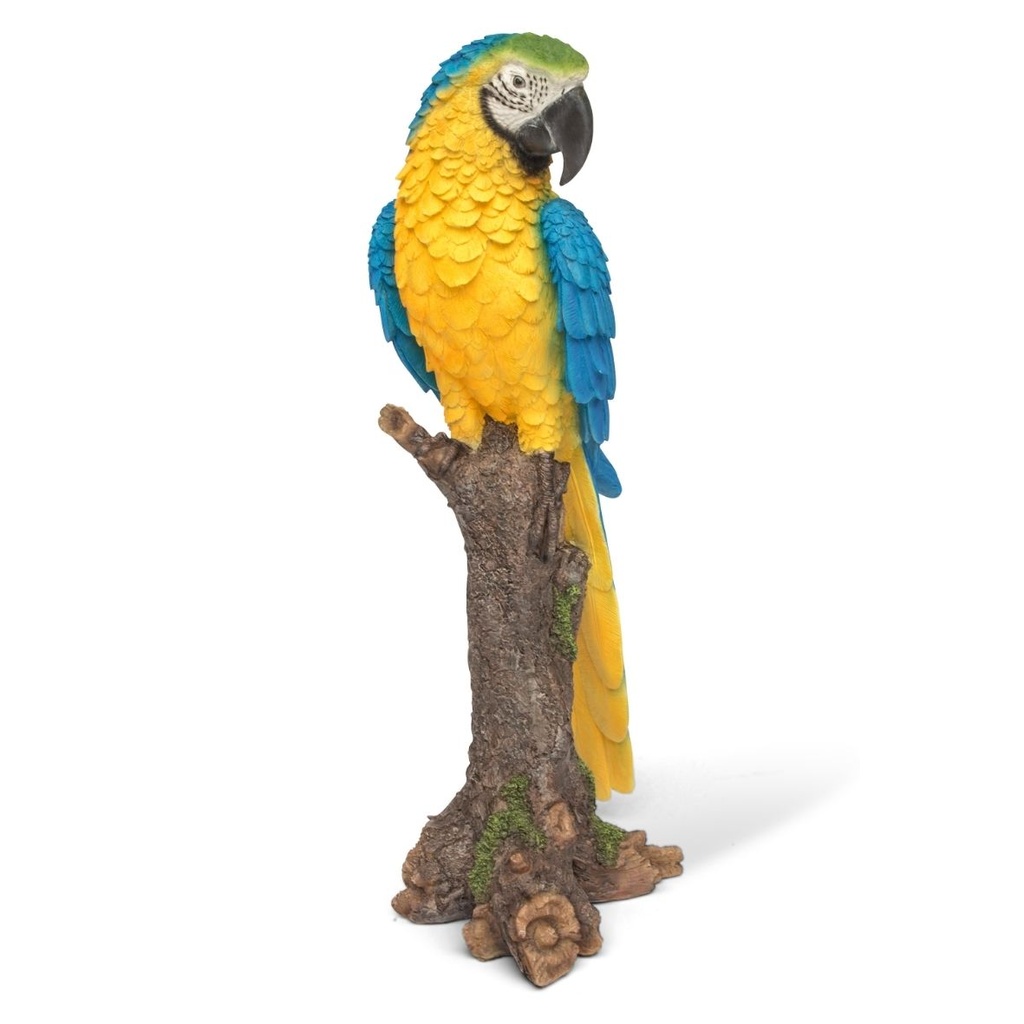
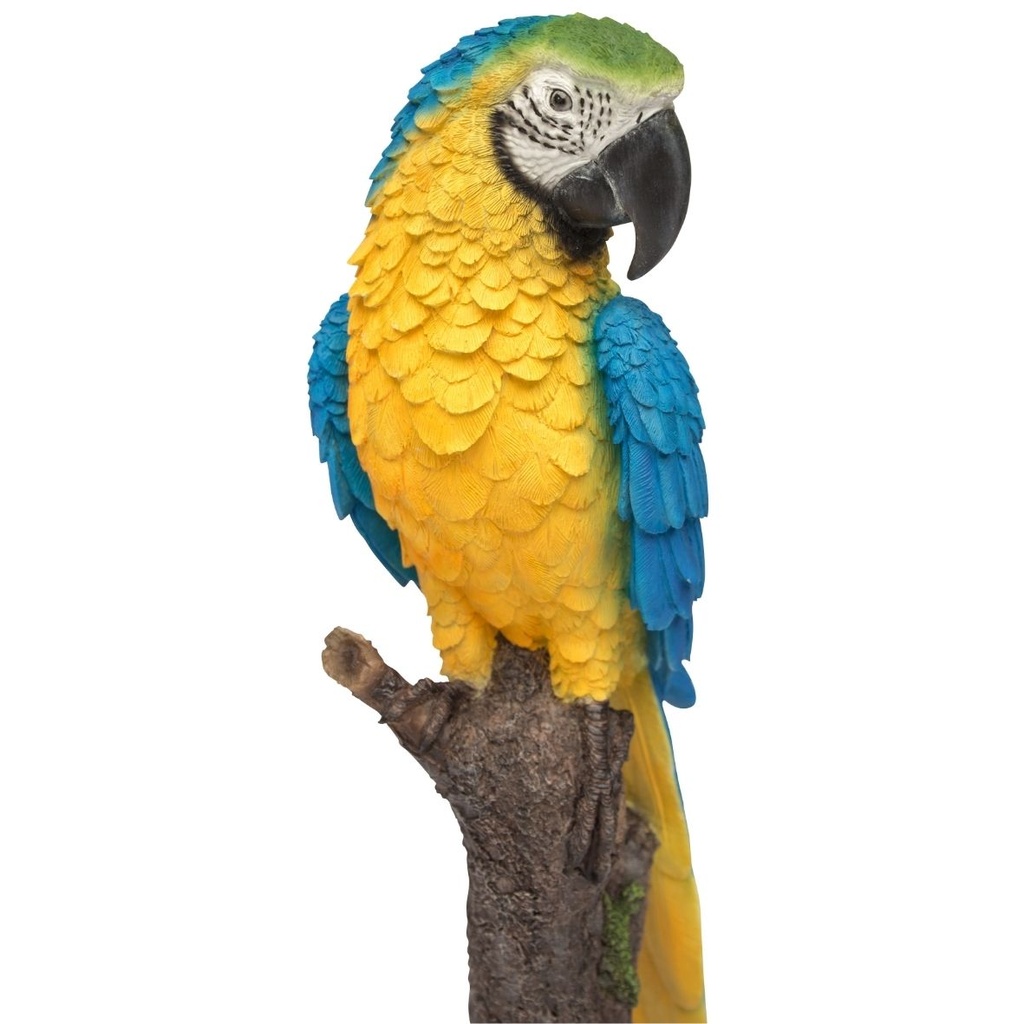
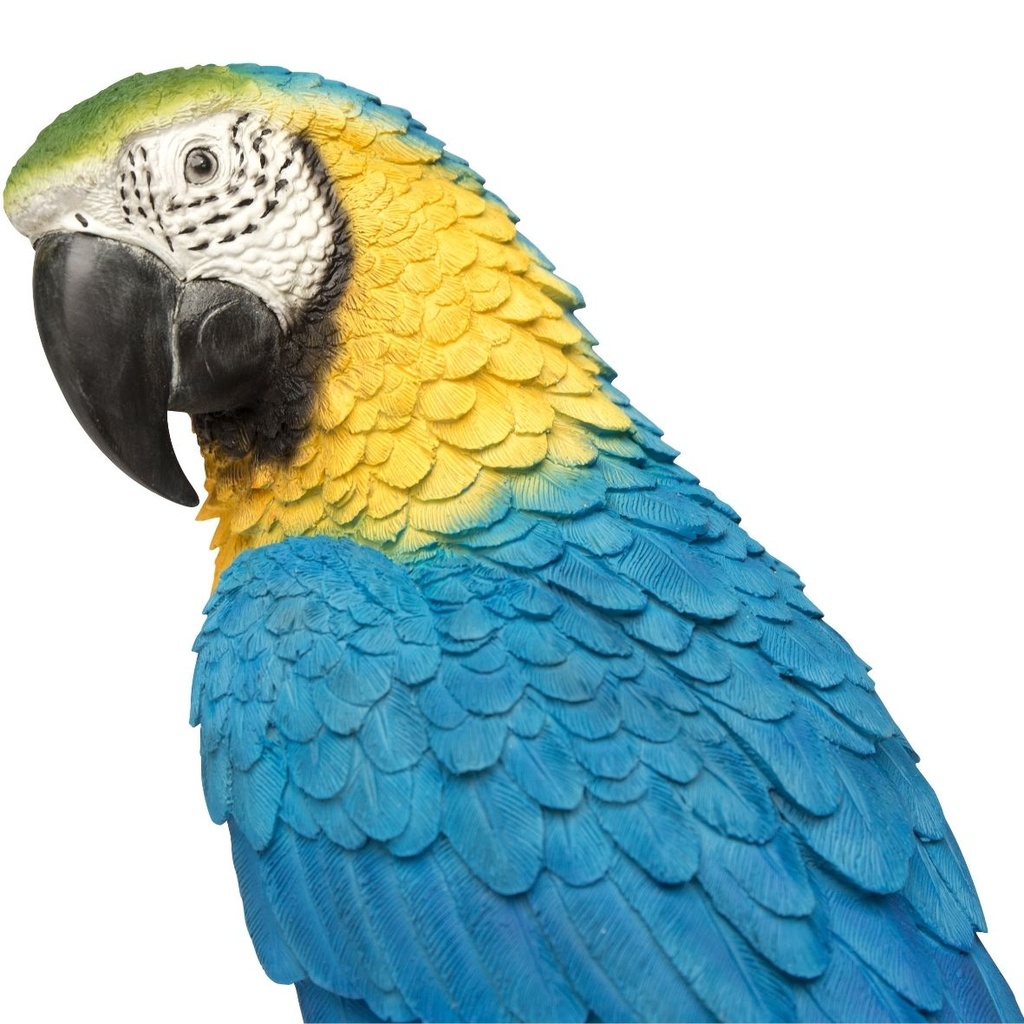
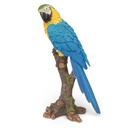
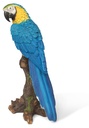
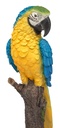
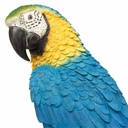
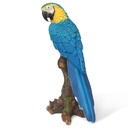
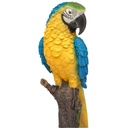
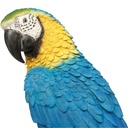
Q: What is the macaw represented by this sculpture?
The cobalt blue plumage with yellow accents on the throat and mask mainly corresponds to the Ara ararauna (blue and yellow macaw) — one of the most well-known and widespread species of macaws, characterized by its intense cobalt blue back and wings and yellow belly and throat. It is the archetypal image of the macaw in popular culture, immediately recognizable by all.
Q: Can this sculpture stay in an outdoor garden all year round?
Yes — unlike the compact parrot (indoor/balcony only), the macaw benefits from triple use including the outdoor garden. The polyresin is tested down to -20 °C and the UV treatment specifically protects the intense cobalt blue, which is naturally more sensitive to fading without protection. Its weight (1.1kg) ensures good stability on the ground or on a ledge.
Q: What is the difference between this macaw and the parrot in the catalog?
The species, size, and use. The parrot (H22.5cm, 500g, Small) is a compact indoor and balcony figurine, available in green or gray. The blue macaw (H38cm, 1.1kg, Medium) is a much larger and more imposing sculpture, exclusively blue, with triple use including the outdoor garden. The macaw is both larger, heavier, and more durable — a piece of a different category, for different spaces and decorative ambitions.
Q: Is this sculpture suitable for someone who loves macaws or exotic birds?
A very targeted and very strong gift for this profile. The blue macaw is the most iconic and desired exotic bird — its color, its actual size, and its personality make it an animal that exotic bird enthusiasts deeply admire. Giving its sculpture to someone who loves macaws is to offer them a decorative presence that says "I know your passion" with great precision.
Q: Can the blue macaw be paired with the green or gray parrot from the catalog for an exotic composition?
Yes — and it is even the most coherent exotic bird composition in the catalog. The blue macaw (H38cm, intense cobalt blue) + the green parrot (H22.5cm) or gray (H22.5cm) in the same space create a family of psittacines with two sizes and two very contrasting color registers. The height difference (H38 vs H22.5cm) creates an immediately readable natural hierarchy.